
Truffles
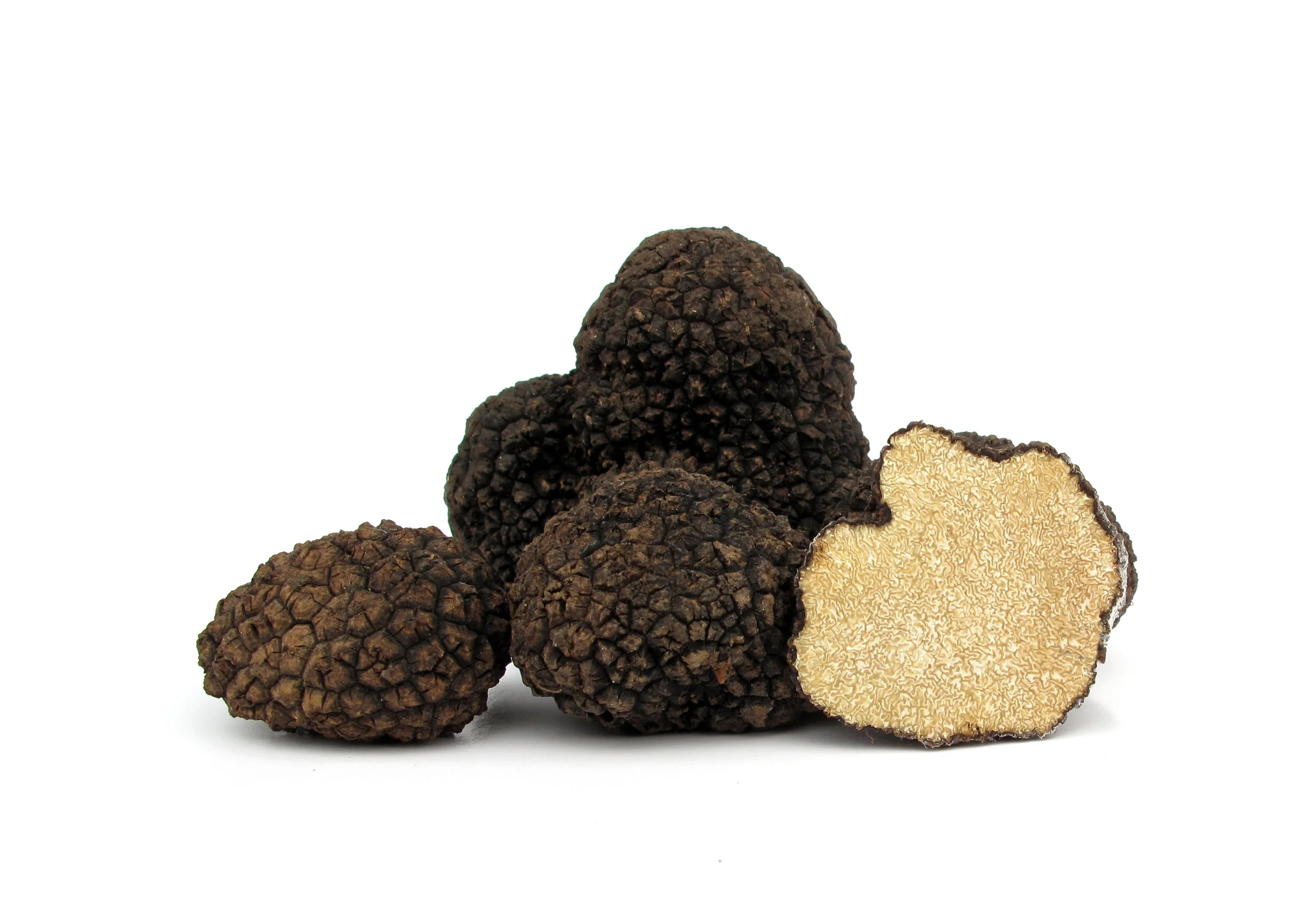
The summer truffle (Tuber aestivum) is found in almost all European countries.
The flavor, size and color of summer truffles (Italian: tartufo estivo) is similar to that of burgundy truffles, but their aroma is less intense and the flesh (gleba) is a paler hazel color.[2]
As their name suggests, summer truffles are harvested earlier than burgundy truffles, from May to August.[2] They are most often found in the southern part of the distribution area of the species, notably in theMediterranean climate areas of France, Italy and Spain.
Source: Wikipedia
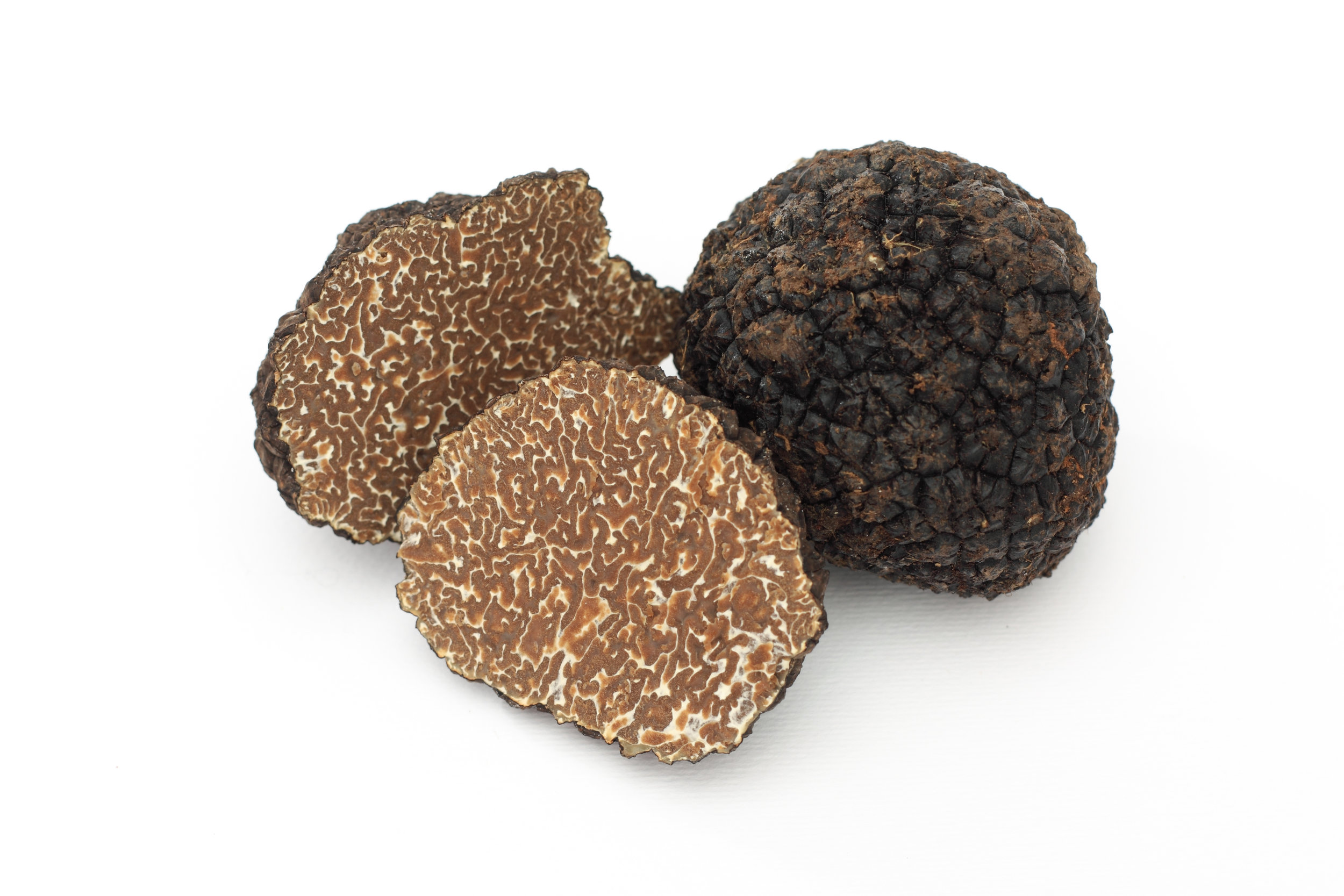
Tuber uncitatum or Burgundy truffles (French: truffe de Bourgogne; Italian: tartufo nero di Fragno or scorzone, "bark"; Spanish: trufa de verano; Swedish: svart sommartryffel), have an intense, hazelnut-like aroma and are highly prized for their gastronomic qualities. They are used in the haute cuisine of France and Italy, as well as a substitute for the Périgord black truffle (T. melanosporum). Like other truffles, they are also canned and bottled for export.[2]
Source: Wikipedia
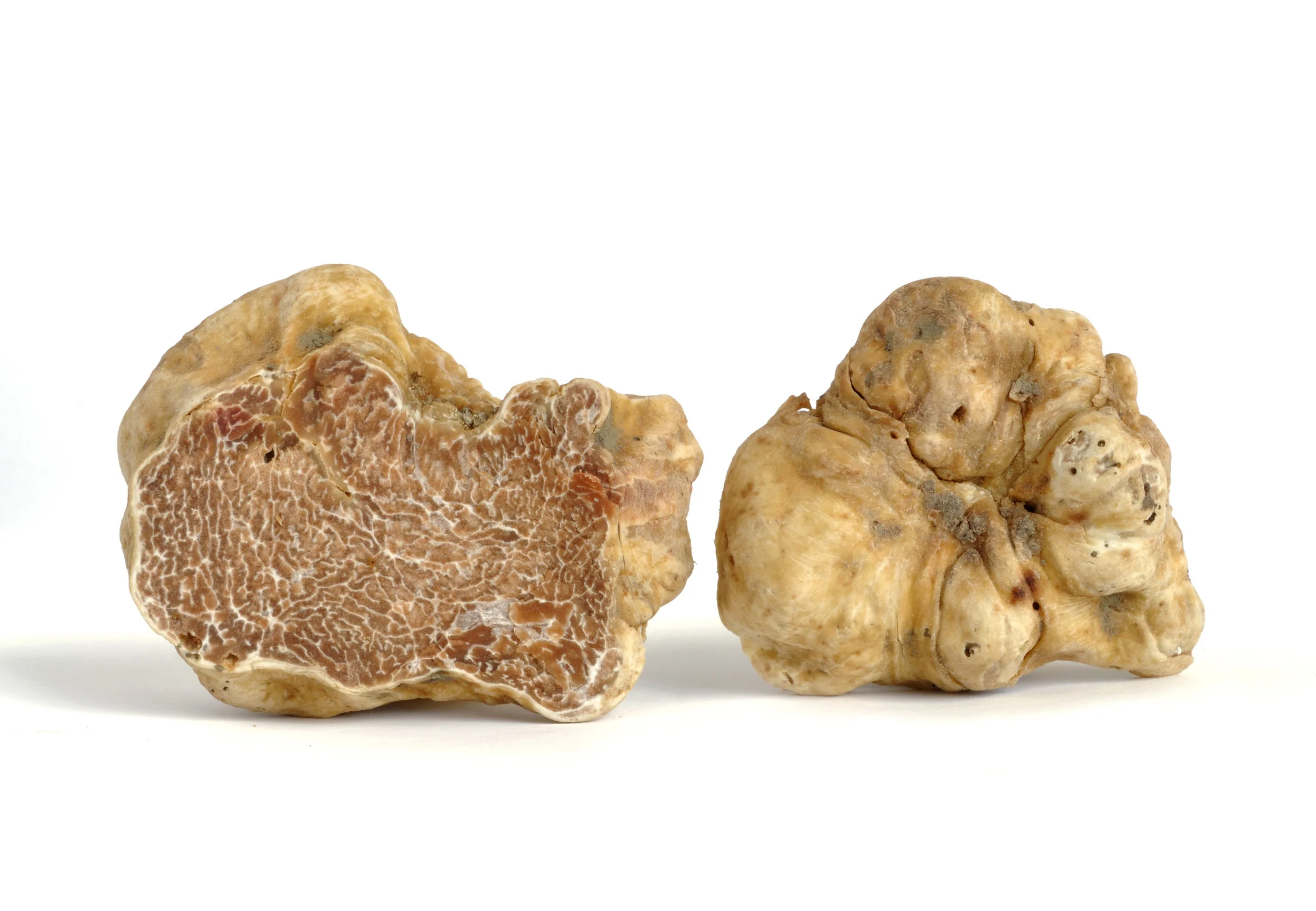
The "white truffle" or "trifola d'Alba Madonna" ("Truffle of the White Mother" in Italian) (Tuber magnatum) is found mainly in the Langhe and Montferrat areas[26] of the Piedmont region in northern Italy and, most famously, in the countryside around the cities of Alba and Asti;[27] Acqualagna. Growing symbiotically with oak, hazel, poplar and beech and fruiting in autumn, they can reach 12 cm (5 in) diameter and 500 g, though are usually much smaller. The flesh is pale cream or brown with white marbling.[24] Italian white truffles are very highly esteemed (illustration, left) and are the most valuable on the market.
Source: Wikipedia
Tuber melanosporum, called the black truffle, Périgord truffle or French black truffle,[1] is a species of truffle native to Southern Europe. It is one of the most expensive edible mushrooms in the world.